
Apple HomeView vs HomeView (Wall Mounted): Specs, Mounts, Price and Requirements
Both Apple HomeView models cost $299, but the tabletop version includes power and a fuller speaker system, while the wall model needs a Schneider Home mount sold separately. Here is how they compare.
Disclosure: This page may contain affiliate links. They do not influence our editorial conclusions. Read the disclosure.
Our pick
- See price at Apple
Top pick
Apple
Maker of iPhone, iPad, Mac, Apple Watch and related services, sold through its online and retail stores.
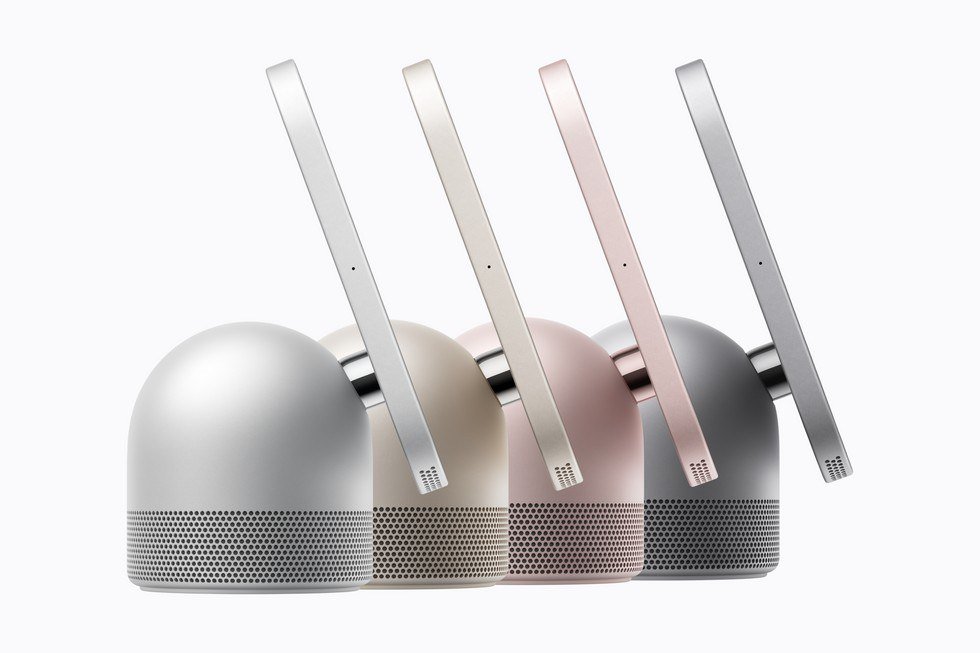
Apple HomeView went on sale on November 13, 2026, and it comes in two versions that look alike from the front but are built for different spots in a home. The standard HomeView sits on a table or counter with its own speaker base. Apple HomeView (Wall Mounted) is a thin panel that needs a separately sold mount and power solution. Both cost $299 in the US, so the choice comes down to where you want the screen, how much you care about sound, and whether you are ready for some installation work.
This guide compares the two models using Apple's published technical specifications and launch announcement, and explains what else you need to buy before either one works.

The short answer
- Choose the tabletop HomeView if you want the best sound, no installation, and everything in the box. It includes a USB-C cable and a 30W power adapter, and it adds a down-firing woofer and passive radiators that the wall model does not have.
- Choose HomeView (Wall Mounted) if you want a control panel in an entryway, hallway or kitchen wall, and you are fine paying extra for a Schneider Home mount and, depending on the mount, a power adapter.
Both run the same software, use the same 7-inch display, chip and camera, and both work with the Home app for settings, automations and smart home accessories.
Price and what is in the box
Apple lists both models at $299 in the US. The difference is what comes with them.
| HomeView | HomeView (Wall Mounted) | |
|---|---|---|
| US price | $299 | $299 |
| Colors | Silver, starlight, rose pink, space gray | Silver, space gray |
| In the box | HomeView, 1.5 m USB-C cable, 30W power adapter, documentation | HomeView (Wall Mounted), documentation |
| Power | Wired power required (included) | Wired power required; compatible wall mount, USB-C cable and power adapter (minimum 20W) each sold separately |
For the wall model, Apple sells three purpose-built mounts from Schneider Home:
- Power Mount USB-C Wall Connector, from $59.95 (US), available now.
- Power Mount AC Wired, from $79.95 (US), available now.
- Power Mount PoE Wired, $129.95 (US), expected in early 2027.
That means the real starting cost for a wall installation is at least $358.95 before any adapter or electrician, while the tabletop model is $299 all in. An AC wired or PoE mount usually means running power or network cable inside the wall, so many buyers will want a licensed electrician or low-voltage installer for those options. Apple's materials do not say whether the AC wired mount requires professional installation, so check the mount's own instructions before you buy.

Size and weight
The two models share the same face, a 5.73-inch square, but their depth is very different.
- HomeView (tabletop): 5.73 inches wide, 5.38 to 6.82 inches tall, 3.78 to 5.13 inches deep, and 2.1 pounds (952 grams). The ranges reflect the angled base.
- HomeView (Wall Mounted): 5.73 by 5.73 inches, only 0.39 inch (0.98 cm) deep, and 0.63 pound (286 grams).
The wall model is closer to a light switch plate in depth than to a speaker. The tabletop model needs roughly the footprint of a small smart speaker.
Display, chip and camera
These are identical on both models, according to Apple's specifications:
- 7-inch (diagonal) Liquid Retina LED-backlit Multi-Touch display with IPS technology
- 1088 by 1088 pixels at 220 ppi, True Tone, fingerprint-resistant coating
- 500 nits maximum brightness and 0.3 nits minimum brightness
- A18 chip
- 12MP Center Stage camera with f/2.4 aperture for FaceTime video calls
- Wi-Fi 6E with MIMO, Bluetooth 6.0 and Thread networking
- Ambient light sensor, temperature and humidity sensor, and accelerometer
Apple notes that the screen measures 6.98 inches diagonally with rounded corners, so it is marketed as 7 inches.
Because Thread is built in, HomeView can talk to Thread-based smart home devices. Apple's spec sheet does not use the phrase "home hub" for HomeView, so if you rely on a HomePod or Apple TV as your current home hub, check Apple's Home app documentation before assuming HomeView replaces it.

Speakers and audio: the biggest difference
This is where the models really split.
- Tabletop HomeView: two custom full-range drivers, a custom down-firing woofer, and dual force-cancelling passive radiators.
- HomeView (Wall Mounted): two custom full-range drivers only.
Both support Spatial Audio with Dolby Atmos for music and video, computational audio for real-time tuning, a four-microphone design for far-field Siri, Sound Recognition for smoke and carbon monoxide alarm sounds, and multiroom audio with AirPlay.
If you plan to play music in the kitchen or living room, the tabletop model's woofer and passive radiators are the reason to pick it. The wall model makes more sense for intercom, FaceTime, controls and quick answers, where bass matters less.
Siri AI, faces and privacy
Both models are built around Siri AI, the new version of Siri powered by Apple Intelligence. Apple says HomeView can recognize up to six people by face and then show each person's own content in Messages, FaceTime, Calendar, Reminders and Find My.
Personal content shows only when a person is recognized by face and their paired iPhone or iPad is nearby and recently unlocked. Siri AI can use personal context, like Calendar and Messages, when HomeView is paired with an Apple Intelligence-enabled iPhone or iPad. It also has onscreen awareness, so it can act on what is shown on the display.
You can wake Siri with "Siri" or "Hey Siri," or swipe down from the top of the screen.

Requirements before you buy
Apple lists these system requirements for both models:
- HomeView running the latest software
- iPhone with iOS 27.2 or later, or iPad with iPadOS 27.2 or later
- Wi-Fi internet access
Siri AI on HomeView works in English in the US, Australia, Canada, India, New Zealand, Singapore, South Africa and the UK, with Canadian French coming later in a free software update. HomeView is on sale in Australia, Canada, India, New Zealand, Singapore, the UK and the US. Apple says it is not sold in the European Union because Siri AI is not currently available in iOS there.
If your household uses Android phones, HomeView is not a good fit, since setup and the personal features depend on an iPhone or iPad.
Built-in apps
Both models include Alarms, Calendar, FaceTime, Find My, Home, Intercom, Messages, Music, Podcasts, Reminders, Safari, Settings, Timers, Weather and World Clock. Audiobooks, Classical Music, News and TV are available from a paired iPhone, along with supported third-party audio and video apps.
Which model fits which room
Kitchen counter or living room: the tabletop model. It is easier to move, needs no installation, and has the fuller speaker system for music and recipe videos.
Entryway or hallway: the wall model. It is the kind of spot Apple itself suggests for it, where the screen works as a home status panel showing locks, lights and temperature.
Bedroom nightstand: the tabletop model. The display dims to 0.3 nits, and alarms and timers are built in.
Rental homes: usually the tabletop model, unless your landlord allows wall work. The USB-C wall connector mount is the least invasive wall option, but it still needs a mount on the wall.
A whole-home setup: some households may pair one of each, with the tabletop model where people listen to music and a wall model by the door.
Where to buy
At launch, Apple sells both models at Apple Store locations, on the Apple Store online, and in the Apple Store app in the supported countries. The Schneider Home USB-C and AC wired mounts are sold through apple.com/store and the Apple Store app as well. Prices here are Apple's US prices at launch on November 13, 2026, and may change.
For more on how Siri AI works across languages, see our guide on how to get Siri AI in your language, and read the launch news on Apple HomeView going on sale.
References
- Apple Newsroom, "Apple HomeView available today," November 13, 2026: https://www.apple.com/newsroom/2026/11/apple-homeview-available-today/
- Apple, "Apple HomeView and Apple HomeView (Wall Mounted) Technical Specifications": https://www.apple.com/apple-homeview/specs/
- Apple, Apple HomeView product page: https://www.apple.com/apple-homeview/
Meet your guide
Lipeiguan
author
What to read next
 Apple TV Will Be the Exclusive U.S. Home of F1 Academy Beginning in 2027 On November 19, 2026, Apple said F1 Academy will stream on Apple TV in the United States beginning in 2027, with every qualifying session and race included for U.S. Apple TV subscr... How to Watch F1 Academy on Apple TV in 2027: Official Calendar and Subscription Note Apple said U.S. Apple TV subscribers will get every F1 Academy qualifying session and race beginning in 2027. This guide records the official seven-round 2027 calendar graphic and...
 Google Adds Computer Use to the Gemini App for Mac in the U.S. On November 19, 2026, Google said computer use is available in the Gemini app for Mac, in English in the U.S. Official requirements include an Apple Silicon Mac on macOS Sequoia 15...