
Bose S1 Pro Battery Recall: How to Check Your Serial Number and Get a Replacement
How to remove a Bose S1 Pro or S1 Pro+ battery pack, read the 17-digit serial number, tell whether the first six digits are in CPSC recall 27-065, and request a free replacement from Bose.
Disclosure: This page may contain affiliate links. They do not influence our editorial conclusions. Read the disclosure.
What this guide covers
Bose and the U.S. Consumer Product Safety Commission are asking owners of S1 Pro and S1 Pro+ portable Bluetooth speakers to check the lithium-ion battery pack inside the speaker, or any spare pack bought as an accessory. Some packs can overheat and ignite. This guide restates the official steps from CPSC recall 27-065, posted November 5, 2026, and from Bose's own recall page. It is not a hands-on test of the speakers or the packs.

If you only need the short version: stop using a pack whose serial number starts with 083723, 078352, 084105, 078591, 078592, 084106 or 086409; take that pack out of the speaker; keep using the speaker on AC power if you want; ask Bose for a free replacement; and do not throw the old pack in household trash or a store battery bin.
Which products are involved
The recall names two packs: the Bose S1 Pro System Battery Pack and the Bose S1 Pro+ System Battery Pack. CPSC says they are intended for the S1 Pro and S1 Pro+ portable Bluetooth speaker systems. They were sold already installed in those speakers and sold separately as accessories or replacements.
CPSC's sales window is December 2017 through July 2026. Individual packs sold for $100 to $160. Speaker systems that included a pack sold for about $700. They were sold at Bose and Best Buy stores, at other retailers and distributors, and online at Bose.com, BestBuy.com, Amazon.com, Walmart.com and other sites. About 634,759 packs were sold in the United States. About 35,400 more were sold in Canada. The recall is being conducted with Canadian authorities.
Bose notes that some S1 Pro systems shipped without a battery pack. If you later added a Bose pack, you should still check that accessory against the serial-number list.
The speaker itself is not being recalled. After an affected pack is removed, both CPSC and Bose say you may keep using the S1 Pro or S1 Pro+ while it is plugged into AC power.
Why the packs are being recalled
CPSC's hazard statement is direct: the recalled lithium-ion battery packs can overheat and ignite, posing a risk of injury from fire and overheating. Bose has received seven reports of packs melting, producing smoke or catching fire. Six of those reports included property damage. No injuries had been reported when the recall was posted.
That combination — a documented fire mechanism and reports of property damage — is why Bose and CPSC want owners to act even if their pack has not shown any problem.


How to tell S1 Pro from S1 Pro+
Bose's recall page tells owners to identify the system first, using official photos of each model. The CPSC image set does the same. The S1 Pro and S1 Pro+ are both compact black Bose portable PA speakers. The S1 Pro+ has a redesigned back panel compared with the original S1 Pro. Matching your speaker to those photos matters because each system uses its own pack, and each pack has its own label layout. The serial-number rule, though, is the same for both: look at the first six digits of the 17-digit number on the pack, not the number on the speaker.
Bose is explicit about that last point. The speaker and the battery pack have different serial numbers. The recall form needs the 17-digit number printed on the battery pack.
How to remove the pack and read the serial number
These steps follow Bose's published instructions.
- Power the S1 system off and disconnect it from power.
- Turn the speaker so you can see the bottom. Loosen the two screws and remove the bottom plate.
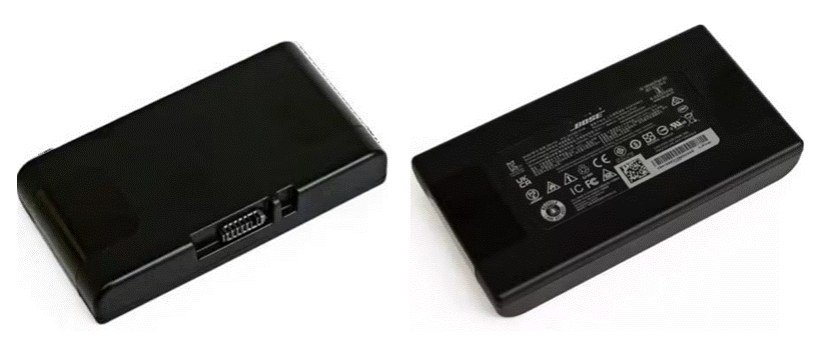
- Remove the battery pack using the pull tabs. Bose shows this separately for the S1 Pro and the S1 Pro+.
- On the pack's label, find the 17-digit serial number printed below the barcode.
CPSC says the same thing in slightly different words: the serial number is printed on a label placed at the bottom of the battery pack. If the pack is not installed in a speaker, you can read that label without taking anything apart.

The CPSC serial-number photo shows two example labels. The S1 Pro example has model 078592 and a circled serial number beginning 078592. The S1 Pro+ example has model 084106 and a circled serial number beginning 084106. Both of those six-digit strings are on the recall list, which makes the photo a useful map of where to look, not a sign that every pack with a Bose label is included.
The serial numbers that are included
Your pack is included if its 17-digit serial number begins with any of these six-digit prefixes:
- 083723
- 078352
- 084105
- 078591
- 078592
- 084106
- 086409
If the serial number does not begin with one of those sequences, Bose says the pack is not included in the recall and is safe to continue using.
Write the full serial number down before you dispose of an affected pack. You will need it to request the replacement.
How to request a free replacement
Bose is offering a free replacement pack. CPSC directs owners to register and provide the serial number at Bose's S1 battery recall page, which resolved to https://www.bose.com/support/s1-battery-recall when checked on November 8, 2026. Bose's page tells owners to enter the pack serial number on its "Start a Repair or Replacement" flow.
Bose adds a caveat: online requests are not available in every region. If the page is unavailable, it says to contact Bose for help.
You can also call Bose toll-free at 800-278-1083. CPSC lists hours of 9 a.m. to 9 p.m. ET Monday through Friday and 9 a.m. to 7 p.m. ET Saturday. Bose's site also links "Product Recalls" in the footer.
Do not wait for the replacement to arrive before you take the old pack out. Both notices say to stop using an affected pack immediately.
How to dispose of the old pack
A recalled lithium-ion pack is not ordinary household waste. CPSC's language is unusually specific because these packs present a greater fire risk than many other batteries:
- Do not put the pack in household trash.
- Do not put it in the general recycling stream, including street-level or curbside recycling bins.
- Do not put it in used-battery recycling boxes at retail or home-improvement stores.
CPSC says a municipal household hazardous waste collection center may accept the pack, but you should call ahead and ask whether that site takes recalled lithium-ion batteries. If it does not, ask the municipality for other guidance. Bose's page repeats the same ban on trash, general recycling and store battery boxes, and tells owners to follow local rules for recalled lithium-ion disposal.
After the pack is out
Once the affected pack is removed, you may keep using the speaker on AC mains power without a battery installed. That is the remedy CPSC and Bose both describe while you wait for the replacement. The recall does not ask you to stop using the speaker itself, only the listed packs.
If a pack overheats, melts, smokes or catches fire, get people away from it and call emergency services if needed. Then report the incident to Bose and, in the United States, you can also report it to CPSC. The recall notices themselves list property-damage reports but no injuries.
Related reading
Bose's everyday purchase rules — shipping, returns, the holiday price-match window and warranty — are covered separately in our Bose shopping guide. That guide is about buying from Bose, not about this recall. For the news summary of CPSC's notice, see Bose S1 Pro and S1 Pro+ battery pack recall.
References
- U.S. Consumer Product Safety Commission. "Bose Recalls Lithium-Ion Battery Packs for S1 Pro and S1 Pro+ Bluetooth Speaker Systems Due to Risk of Injury from Fire and Overheating Hazards." Recall date November 5, 2026. Recall number 27-065.
- Bose. "Recall of Certain S1 Pro System Battery Packs." bose.com/support/s1-battery-recall. Accessed November 8, 2026.
Meet your guide
Lipeiguan
author
What to read next
 Google Adds Computer Use to the Gemini App for Mac in the U.S. On November 19, 2026, Google said computer use is available in the Gemini app for Mac, in English in the U.S. Official requirements include an Apple Silicon Mac on macOS Sequoia 15... How to Use Gemini Computer Use on a Mac: Official Requirements, Permissions and Examples Official Google requirements for computer use in the Gemini app for Mac: an Apple Silicon Mac on macOS Sequoia 15.0 or later, a personal Google account for people 18 or older, a Go...
 How to Choose a SwitchBot Lock: Lock Pro vs Lock Ultra vs Lock Vision and Vision Pro A research-based guide to official SwitchBot Lock Pro, Lock Ultra, Lock Vision and Lock Vision Pro specs and November 20, 2026 U.S. prices, including batteries, hubs, keypads, comp...