
Gemini 4 Hydrogen Explained: What Changes in the Gemini App, Google Search and Chrome
A plain-English guide to Google's Gemini 4 Hydrogen: where it appears, what free users get vs Google AI Pro and Ultra subscribers, the Search changes, thinking levels and how to try it today.
Disclosure: This page may contain affiliate links. They do not influence our editorial conclusions. Read the disclosure.
Our pick
- See price at Google Store
Top pick
Google Store
Google's online store for Pixel phones, Fitbit wearables, Nest devices and accessories.
What this guide covers
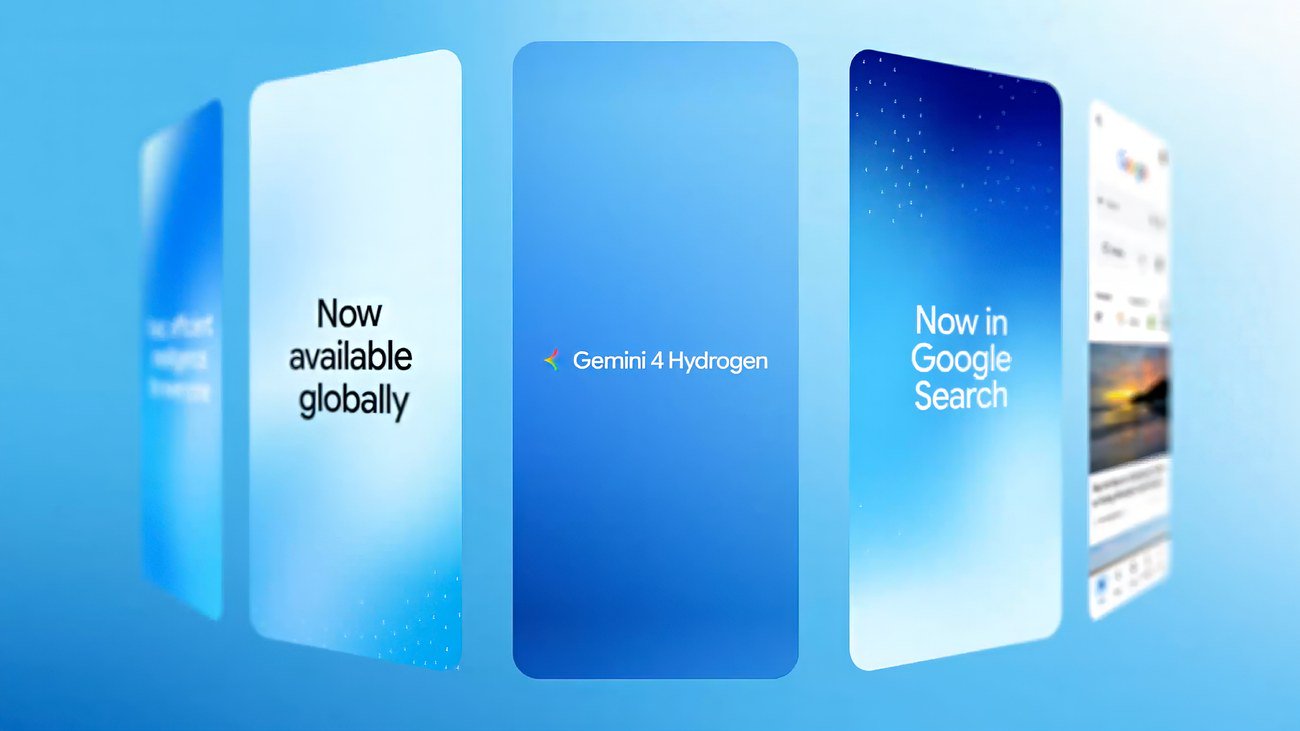
Google released Gemini 4 Hydrogen on November 12, 2026, and unlike many model launches, this one reaches ordinary users on day one. Hydrogen is rolling out in the Gemini app, in Google Search for all users worldwide, and in Gemini in Google Sheets for paying subscribers. Google calls the Search change "the biggest model upgrade to Search yet."
Most coverage of the launch focuses on developer benchmarks. This guide is for everyone else: what Hydrogen is, where you will notice it, what free users get compared with Google AI Pro and Ultra subscribers, and how to try it today. It is based on Google's official announcements, not on our own testing.

What Gemini 4 Hydrogen is
Google now has three Gemini 4 models in its lineup. Gemini 4 Carbon and Gemini 4 Argon are the frontier models, which Google positions for deep, long-horizon reasoning on hard problems. Hydrogen is the fast, efficient model, built for what Google calls "rapid execution" and everyday tasks.
In practice, Hydrogen replaces Gemini 3.8 Flash as Google's speed-focused model. Google's headline claims against 3.8 Flash:
- It finishes tasks about 2.5 times faster at its default setting.
- It cuts fabricated claims by more than five times.
- It adapts better when a tool call fails or a search comes back empty.
Google also says Hydrogen scores slightly above Argon on the Artificial Analysis Intelligence Index at its default "high" thinking level (51 vs. 50), and reaches 54 at its highest setting. Those are Google's own figures, and independent results may differ.
Where you will see it
Google lists these surfaces at launch:
- Gemini app: Hydrogen appears in the model drop-down. Free users get it through automatic model selection when Gemini decides it is the right model for a prompt.
- Google Search: available globally to all users, including in AI Mode.
- Gemini in Google Sheets: starting with Google AI Pro and Ultra subscribers, and for eligible business subscriptions.
- Gemini for business: through the API and the model drop-down.
- Developers: the Gemini API in Google AI Studio and Android Studio, and Google Antigravity for paid Google AI Pro and Ultra subscribers.
Free vs paid: who gets what
| Where | Free users | Google AI Pro / Ultra |
|---|---|---|
| Google Search | Yes, for all users globally | Yes |
| Gemini app | Via auto model selection when appropriate | Model drop-down |
| Gemini in Google Sheets | Not listed at launch | Yes, starting with these plans |
| Google Antigravity | No | Yes |
Google's post describes the app drop-down as part of the rollout "for everyone," with free users routed to Hydrogen by auto selection. If you do not see the option yet, the rollout may not have reached your account.
What changes in Google Search

Robby Stein, Google's VP of Product for Search, listed four improvements:
- Better understanding of intent. You can ask in your natural flow of thought, including multi-part questions, typos and very specific requests, and Search should address each part.
- Improved query fan-out and linking. Search runs simultaneous queries across the subtopics of your question and links to a broader range of sites than before.
- More visual responses. Expect more images, structured responses, comparison tables and custom tools in answers.
- Richer language understanding across all languages that AI Mode supports.
For shoppers, the comparison tables and broader linking are the parts to watch. A question like "quiet cordless vacuum for a small apartment with pets under $300" is exactly the multi-part, specific request Google says Hydrogen handles better.
What changes in the Gemini app
Google says Hydrogen makes the Gemini app better at following instructions across a conversation, calling the right tools, and getting to a usable result with less back-and-forth. Its examples:
- Writing and research: drafts, study guides and rewrites that stick to your tone, format and rules on the first try, and clear tables when you compare products or summarize dense material.
- Multi-step tasks: breaking a goal into steps and pulling context from your uploads, Google apps such as Gmail and Google Drive, and Connected Apps such as Airtable and Dropbox.
- Long documents and media: Google says Hydrogen can take up to 1 million tokens of input and turn dense PDFs, spreadsheets, charts, audio and recorded video into cited reports and structured summaries. For everyday users, that means you can upload a long manual, a set of receipts or a recorded lecture and ask for a summary or a table of key points.
- Prototyping: generating working layouts and small interactive projects in fewer prompts.
Thinking levels, explained simply
Hydrogen has four thinking levels: low, medium, high (the default) and a new "xhigh." Higher levels reason longer before answering. Google says the levels scale predictably, so you only wait for, and in the API pay for, the reasoning depth a task needs. Most app and Search users will not choose a level directly; the default is high.
How to try it today
In Google Search
- Go to Google Search and ask a detailed question, or open AI Mode.
- Phrase it the way you would say it out loud, including every condition that matters.
- Look for comparison tables and the wider set of linked sources in the response.
In the Gemini app
- Update the Gemini app or open gemini.google.com.
- Open the model drop-down and look for Gemini 4 Hydrogen.
- If you are on the free tier and do not see it, keep using the default; Google says auto selection will route suitable prompts to Hydrogen.
In Chrome
Google also published a short tip on Gemini in Chrome on the same day. To get answers without leaving a page:
- Click the Gemini icon in the Chrome toolbar to open the side panel.
- Ask Gemini to summarize a long report, compare product details on the page, or explain a topic in plain language while you keep your place.

Google's Chrome post does not say which model powers the side panel, so do not assume it is Hydrogen.
Safety claims worth knowing
Google says Hydrogen brings its latest Gemini 4 safety stack to its widest audience yet. Among its claims: up to 81% less overreach in agentic tasks, a 96.7% honesty rate on Google's internal agent honesty evaluation, more than 2.3 times better resistance to indirect prompt injection on the Gray Swan benchmark, and false refusals under 0.4% on HealthBench Pro. These are Google's own evaluations.
For developers, briefly
Hydrogen is priced at $1.50 per million input tokens and $7.50 per million output tokens, flat across its 1 million-token context window, and can produce up to 1 million output tokens. Google also introduced Orchestrator in Google Antigravity, which switches between Carbon and Hydrogen in one session; Google says it reached near-Carbon task success on Terminal-Bench 4.0 while using 24% less quota and finishing 19% faster on average.
Bottom line
For most people, Hydrogen shows up quietly: better answers in Search, and a faster default model in the Gemini app. Paying subscribers get it in more places, including Sheets and Antigravity. The benchmark numbers come from Google, so the real test is whether your own everyday questions get clearer, better-sourced answers.
For the launch in brief, see our news post on Gemini 4 Hydrogen in Search and the Gemini app. If you drive with an iPhone, our guide to using Gemini on Apple CarPlay covers Gemini in the car.
References
- Google, "Introducing Gemini 4 Hydrogen," Nov 12, 2026: https://blog.google/innovation-and-ai/models-and-research/gemini-models/introducing-gemini-4-hydrogen/
- Google, "Google Search gets a major upgrade with Gemini 4 Hydrogen," Nov 12, 2026: https://blog.google/products-and-platforms/products/search/gemini-4-hydrogen-search-upgrade/
- Google, "Get quick answers from Gemini on any website," Nov 12, 2026: https://blog.google/innovation-and-ai/products/gemini-app/research-with-gemini-in-chrome/
Meet your guide
Lipeiguan
author
What to read next
 Google Adds Computer Use to the Gemini App for Mac in the U.S. On November 19, 2026, Google said computer use is available in the Gemini app for Mac, in English in the U.S. Official requirements include an Apple Silicon Mac on macOS Sequoia 15... How to Use Gemini Computer Use on a Mac: Official Requirements, Permissions and Examples Official Google requirements for computer use in the Gemini app for Mac: an Apple Silicon Mac on macOS Sequoia 15.0 or later, a personal Google account for people 18 or older, a Go...
 How to Choose a SwitchBot Lock: Lock Pro vs Lock Ultra vs Lock Vision and Vision Pro A research-based guide to official SwitchBot Lock Pro, Lock Ultra, Lock Vision and Lock Vision Pro specs and November 20, 2026 U.S. prices, including batteries, hubs, keypads, comp...