HELOC vs Cash-Out Refinance vs Personal Loan: How to Choose

Disclosure: This page may contain affiliate links. They do not influence our editorial conclusions. Read the disclosure.
Our pick
- See price at loanDepot
Top pick
loanDepot
US mortgage lender offering purchase loans, refinancing and home equity lines of credit.
What this guide covers
When you need a large sum for a renovation, a big bill or debt consolidation, three options usually come up: a home equity line of credit (HELOC), a cash-out refinance and an unsecured personal loan or line of credit. They can look similar on a lender's homepage, but they work very differently, and two of them put your home on the line. With lenders such as loanDepot widening HELOC eligibility to credit scores from 600, more homeowners are seeing these offers. This guide compares the three using the Consumer Financial Protection Bureau's (CFPB) official HELOC booklet, so you can ask the right questions before you apply. It is general information, not financial advice.

The three options at a glance
The CFPB's booklet, What You Should Know About Home Equity Lines of Credit, compares a HELOC with other ways to borrow. Here is a simplified version for the three options in this guide:
| HELOC | Cash-out refinance | Personal line of credit | |
|---|---|---|---|
| How it works | Borrow against your home equity, spend and repay as you go | Replace your mortgage with a bigger one and take the difference in cash | Borrow based on your credit, without using your home as collateral |
| How much | Generally a percentage of your home's appraised value minus what you owe | Generally a percentage of the appraised value: your existing loan plus the cash-out amount | Up to the credit limit the lender sets |
| Rate | Typically variable | Variable or fixed | Typically variable |
| Home at risk? | Yes | Yes | No |
The CFPB also notes that unsecured personal loans and lines usually have higher interest rates than loans that use your home as collateral, and need solid credit.
How a HELOC works
A HELOC is a line of credit secured by your home. According to the CFPB, it has two main phases:
The draw period. Once approved, you can generally spend up to your credit limit whenever you want, often with special checks or a card. Some plans require a minimum draw each time or require you to take an initial amount when the line is opened. During the draw period, some plans require payments that include some principal, while others allow interest-only payments, meaning you pay nothing toward what you borrowed.
The repayment period. When the draw period ends, you enter repayment. The lender may set a schedule to repay the full amount, often over 10 or 15 years. Or you may owe the entire balance at once, a balloon payment. The CFPB warns that if you cannot make a balloon payment, by refinancing or other means, you could lose your home.
Variable rates. Most HELOCs have variable rates made of two parts: an index, such as the US prime rate, and a margin that the lender adds. Your payments can change even if you do not borrow more. Some lenders offer an introductory or "teaser" rate that is unusually low for a short period, such as six months. Some HELOCs let you convert part of the balance to a fixed rate, which is typically higher but more predictable.
Selling your home. The CFPB says that if you sell, you are generally required to pay off the HELOC in full immediately.
Lenders' products vary. loanDepot, for example, says on its HELOC page that its 5x5 HELOC is drawn in full at closing, so interest starts on the whole amount from day one. Always read the specific lender's disclosures.
How a cash-out refinance works
With a cash-out refinance, you replace your existing mortgage with a larger one and take the difference in cash. You continue to make just one mortgage payment, which is simpler than juggling a mortgage and a HELOC.
The CFPB lists the typical disadvantages: closing costs are generally higher, it may take longer to pay off your mortgage, and the interest rate may be higher than your current mortgage. That last point matters most. If your existing mortgage has a low rate, refinancing the whole balance at a higher rate just to access some cash can cost far more over time than borrowing a smaller amount separately.
How personal loans and lines of credit work
A personal line of credit lets you borrow based on your credit, without using your home as collateral. Like a HELOC, you can borrow and repay for several years without new approvals. The CFPB notes that solid credit is required, you may need to pay the entire amount due once a year on some lines, and rates are higher than on loans secured by your home.
The big advantage is that your home is not at risk if you cannot repay. For smaller amounts, or for borrowers who do not want to put their home up as collateral, that difference can outweigh the higher rate.

Up-front costs to compare
Home-secured borrowing usually comes with fees. The CFPB lists examples for HELOCs:
- an appraisal fee for a formal estimate of your home's value;
- an application fee, which may not be refunded if you are turned down;
- closing costs, including attorney, title search, mortgage preparation and filing, property and title insurance, and taxes.
Some lenders waive some or all of these, and some HELOCs carry annual, transaction, inactivity or early termination fees. Cash-out refinances generally have higher closing costs. Ask every lender for the full list.
Your rights when you take a HELOC
The CFPB booklet summarizes several federal protections:
- Lenders must disclose the APR, variable-rate information, payment terms, annual fees and other charges.
- In general, a lender cannot charge a nonrefundable application fee until three days after you receive the disclosures. If the lender changes the terms before the loan is made, you can walk away and get your fees back, except when the change is only to the variable rate.
- Lenders must give you a list of HUD-approved housing counselors in your area.
- Right to cancel: under federal law, you can cancel the credit line within the first three days after the account is opened by notifying the lender in writing. The lender must cancel the loan and return the fees you paid.
The CFPB also warns that lenders can generally freeze or reduce your credit line if your home's value falls or your finances worsen. If that happens, ask the lender why, check your credit reports for errors and consider whether a new appraisal or another lender is an option.
Which option fits which situation?
There is no single best choice, but some patterns are common:
- A project with costs spread over time, such as a staged renovation, can suit a HELOC, because you draw only as needed. If a lender requires the full amount at closing, that advantage shrinks.
- A large, one-time need when current mortgage rates are lower than your existing rate is where a cash-out refinance can make sense, though closing costs are higher.
- A smaller amount, or a borrower who does not want to risk the home, points toward an unsecured personal loan or line, even at a higher rate.
- Consolidating credit card debt with home equity can lower the rate, but it turns unsecured debt into debt secured by your home. It only works if the cards do not fill up again.
- Planning to sell soon? The CFPB notes that you generally must repay a HELOC when you sell, so up-front fees may not be worth it.
Questions to ask before you apply
The CFPB suggests getting at least three HELOC estimates and comparing them side by side. For each offer, ask:
- What is the APR, and is it fixed or variable? What index and margin are used?
- Is there an introductory rate, and what happens when it ends?
- How long are the draw and repayment periods? Is there a balloon payment?
- What are the appraisal, application, closing and annual fees?
- Are there minimum draws, minimum balances or inactivity fees?
- Can I convert part of the balance to a fixed rate?
- Am I comfortable with the worst case, in which I could lose my home?
Where to get help
The CFPB's site has answers to common questions at consumerfinance.gov/ask-cfpb, and you can find a HUD-approved housing counselor through consumerfinance.gov/find-a-housing-counselor for free or low-cost advice. You can also submit a complaint about a lender to the CFPB.
More about the lender in our news coverage is on the loanDepot brand page.
Editorial disclosure
SurfGirl may earn a commission if you apply through links on this page. That does not affect our coverage. We are not a lender and do not provide financial advice; facts are from the CFPB and lender pages as of October 30, 2026.
References
- Consumer Financial Protection Bureau. What You Should Know About Home Equity Lines of Credit (HELOC). Retrieved October 30, 2026, from https://files.consumerfinance.gov/f/documents/cfpb_heloc-brochure.pdf
- Consumer Financial Protection Bureau. What is the difference between a home equity loan and a home equity line of credit (HELOC)?. Retrieved October 30, 2026, from https://www.consumerfinance.gov/ask-cfpb/what-is-the-difference-between-a-home-equity-loan-and-a-home-equity-line-of-credit-heloc-en-247/
- Consumer Financial Protection Bureau. What other types of loans are similar to a HELOC?. Retrieved October 30, 2026, from https://www.consumerfinance.gov/ask-cfpb/what-other-types-of-loans-are-similar-to-a-heloc-en-253/
- loanDepot. Home Equity Line of Credit (HELOC). Retrieved October 30, 2026, from https://www.loandepot.com/heloc
Meet your guide
Lipeiguan
author
What to read next
loanDepot Review: Loan Types, Lifetime Guarantee, Satisfaction Scores and the 2024 Breach A research-based review of loanDepot's mortgage range, the fine print of its Lifetime Guarantee, independent satisfaction scores and its 2024 data breach. 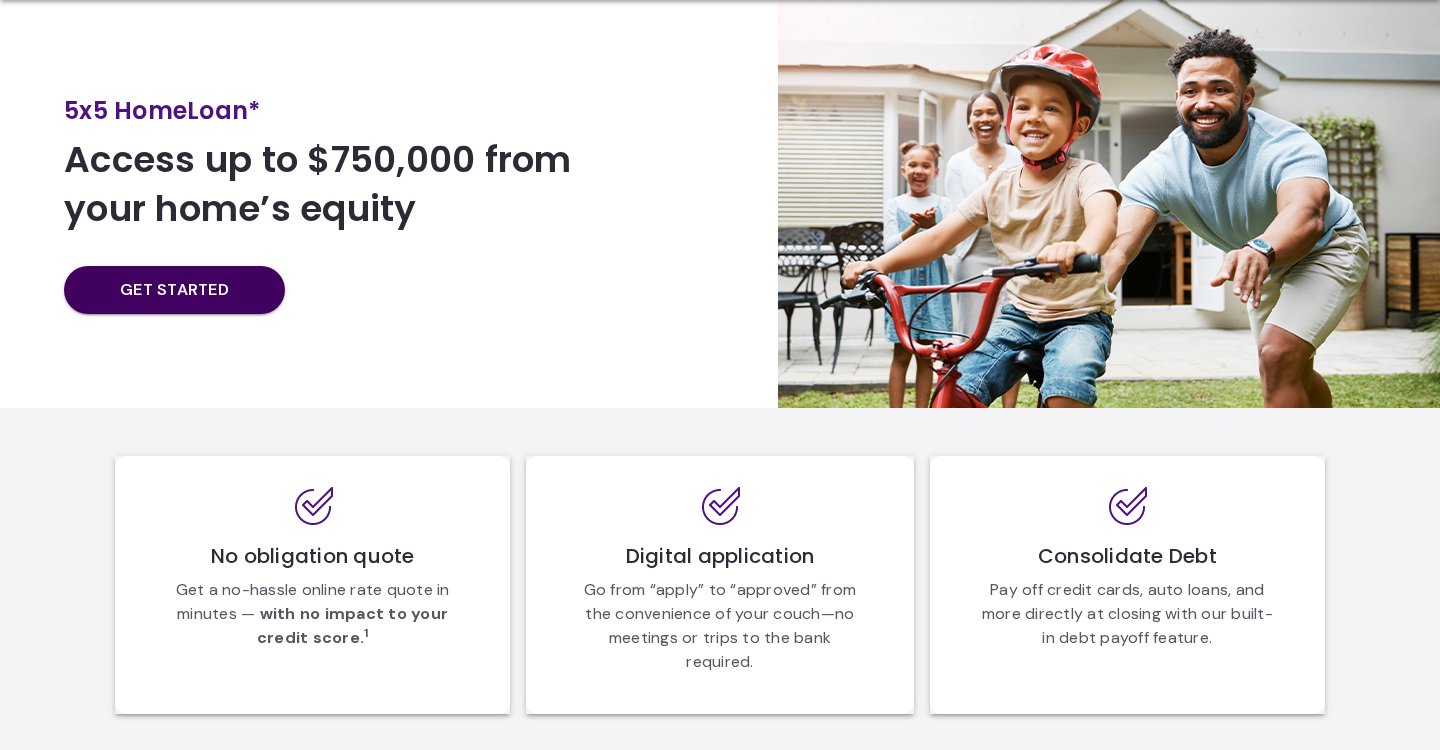 loanDepot Opens Its Digital HELOC to Credit Scores From 600 in 47 States