
Razer Raiju V3 Pro Signature Edition vs DualSense Edge: Which PS5 Pro Controller?
Razer's limited Raiju V3 Pro Signature Edition and Sony's DualSense Edge take opposite approaches to a premium PS5 controller. We compare sticks, buttons, haptics, battery, PC use and availability from official specs.
Disclosure: This page may contain affiliate links. They do not influence our editorial conclusions. Read the disclosure.
Our pick
- See price at Razer
Top pick
Razer
Gaming hardware and lifestyle brand founded in 2005, known for Razer mice, keyboards, headsets, Blade laptops, Kishi and Raiju controllers and Synapse software.
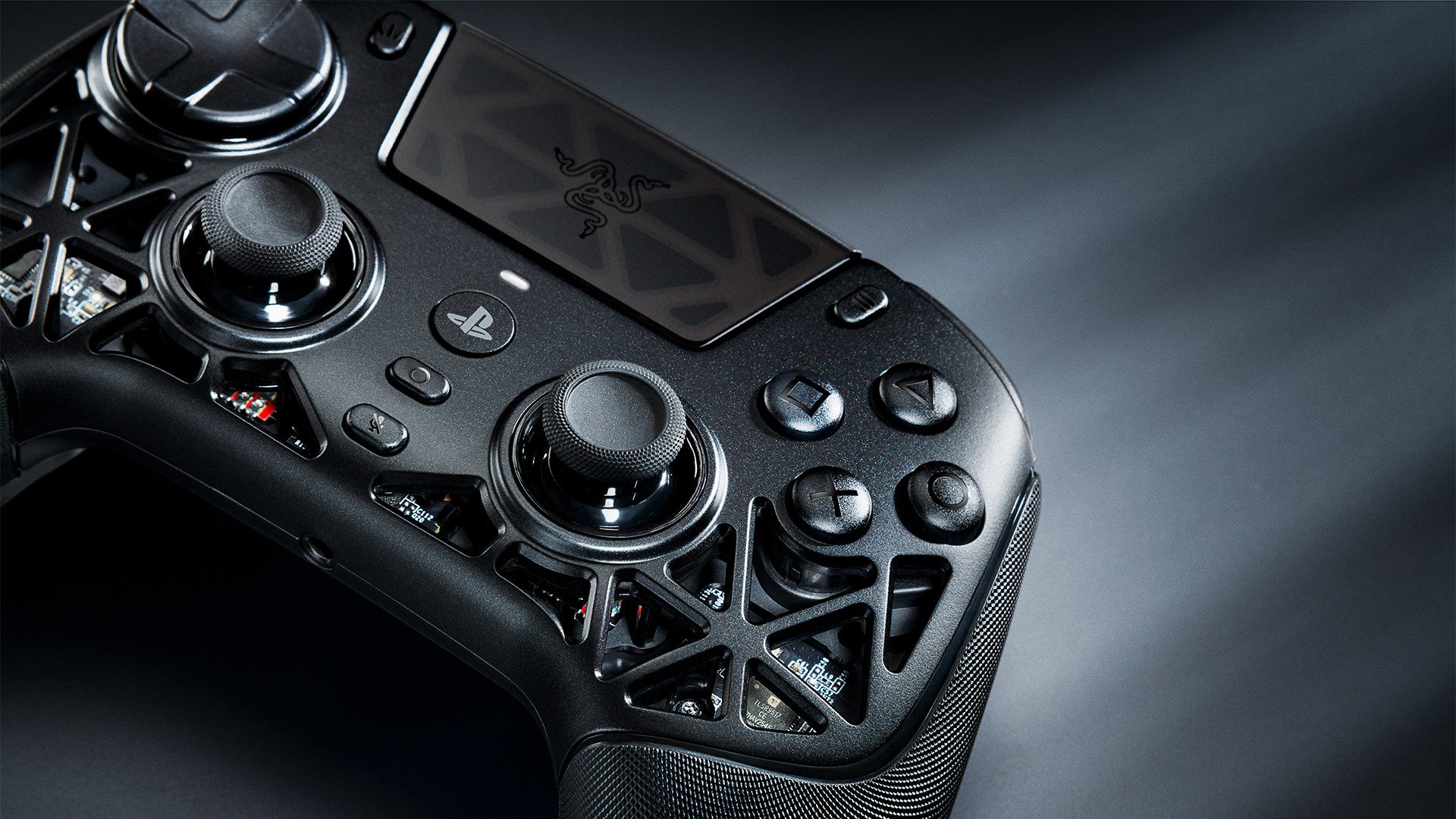
If you want a premium PlayStation 5 controller in late 2026, the two names most buyers will weigh are Sony's own DualSense Edge and Razer's Raiju V3 Pro family, which now includes the limited, $349.99 Raiju V3 Pro Signature Edition. They take very different approaches. Sony builds on the standard DualSense with haptics, adaptive triggers and profile switching; Razer strips out haptics in favor of contactless TMR sticks, mouse-click buttons and high PC polling rates, and in the Signature Edition adds a magnesium alloy shell.
This comparison is research-based: it uses Sony's and Razer's official product pages and Razer's press materials. We have not tested either controller, and we only list specifications each company publishes.

The short answer
- Choose the DualSense Edge if you want Sony's haptic feedback, adaptive triggers, built-in microphone and motion controls in a customizable controller.
- Choose the Raiju V3 Pro Signature Edition if you want contactless TMR thumbsticks, six extra mappable buttons, up to 2,000 Hz PC polling and a premium, serialized metal-shell build, and you are happy to give up haptics.
- If you like the Razer approach but not the collector price, the standard Raiju V3 Pro, which Razer lists from US$219.99, shares the core feature set.
Side-by-side
| Feature | Razer Raiju V3 Pro Signature Edition | Sony DualSense Edge |
|---|---|---|
| Maker's positioning | Limited, serialized "collector's piece" PS5 controller | PlayStation's high-performance, ultra-customizable PS5 controller |
| Licensing | Officially licensed for PS5; PC compatibility not tested or endorsed by Sony | First-party Sony |
| Shell | Magnesium alloy exoskeleton, open-air polygonal design | DualSense design with slip-resistant inner grips |
| Weight (official) | 260 g | Not listed on the product page we reviewed |
| Thumbstick sensors | Contactless TMR | Not specified on the product page we reviewed |
| Stick caps in box | Short convex and tall concave alternatives | 2 standard, 2 high dome, 2 low dome |
| Extra buttons | 2 claw-grip bumpers + 4 removable mouse-click back buttons | Back buttons in half dome and lever styles (2 of each in box) |
| Haptics and adaptive triggers | Not listed (Razer says standard V3 Pro has no haptics) | Yes, in supported titles |
| Built-in microphone, motion controls | Not listed | Yes |
| Trigger tuning | Adjustable actuation range in software | Trigger dead zones adjustable |
| Profiles | Up to 4 onboard via Razer apps | Multiple profiles, switched in game with Fn button |
| PC connection | Razer HyperSpeed dongle, cable; up to 2,000 Hz HyperPolling on PC | USB cable or Bluetooth; PlayStation Accessories app for Windows |
| Case | Premium leatherette case | Carrying case that allows charging inside |
| Where to buy | Razer.com and select RazerStores only | PlayStation and retailers |
| Price | $349.99 / £349.99 / €368.99 MSRP | Check PlayStation Direct for current pricing |
Design and build
Razer's pitch for the Signature Edition is materials. The exoskeleton is magnesium alloy, chosen, Razer says, for its strength-to-weight balance and the ability to form the fine curves a controller needs. The top and back plates use an open polygonal design with chamfered edges, and a nano coating protects the exposed internals. A laser-etched, semi-transparent glass touchpad sits in the center, and the action buttons are double-shot PBT so legends do not wear off. Razer lists the weight at 260 g.
Sony's DualSense Edge keeps the familiar DualSense shape and adds slip-resistant inner grips, aimed at comfort in long sessions. Its emphasis is on modularity and immersion rather than exotic materials. It comes with a carrying case that lets you charge the controller over USB while it is stored, and Sony notes it works with the DualSense charging station.

Controls and customization
Both controllers let you remap buttons and adjust stick and trigger behavior, but they are aimed at slightly different players.
Razer concentrates on competitive input speed. The TMR thumbsticks are contactless, which Razer says improves accuracy and durability. Six extra mappable buttons, including two claw-grip bumpers on the top edge and four mouse-click back buttons, let you keep thumbs on the sticks while jumping, reloading or sliding. In the Razer PS Controller App or Razer Synapse 4 you can remap buttons, set thumbstick dead zones and trigger actuation range, and save up to four onboard profiles.
Sony concentrates on flexible profiles. The DualSense Edge opens a quick customization menu when you press the Fn and Options buttons in game. You can remap buttons, configure stick sensitivity, stick dead zones and trigger dead zones, set vibration intensity, and save configurations to profiles you can swap on the fly. In the box you get three types of stick caps and two styles of back buttons.
Immersion features
This is the clearest split. Sony says the DualSense Edge includes all the immersive DualSense features: haptic feedback, adaptive triggers, a built-in microphone and motion controls in supported games. Razer's FAQ for the standard Raiju V3 Pro states that it does not include haptic feedback, a choice Razer says reduces weight and latency, and the Signature Edition page does not list haptics, a microphone or motion controls.
If you mostly play single-player PS5 games that use adaptive triggers and haptics heavily, the DualSense Edge keeps those effects. If you mostly play competitive shooters and value input speed and extra buttons over rumble, Razer's design is built for you.
Console behavior
Razer states that the PS5 only allows its DualSense controller to wake the console from sleep, so with a Raiju you need a DualSense to power on the system before switching over. Keep a standard DualSense charged if you pick the Razer.
PC play
Razer markets the Raiju V3 Pro line as optimized for PC. The Signature Edition delivers up to 2,000 Hz polling with Razer HyperPolling Wireless on PC, according to Razer's press release. The standard model's page also mentions native Steam support for accurate PlayStation glyphs. Razer notes that PC compatibility is not tested or endorsed by Sony.
Sony says the DualSense Edge connects to PC by USB cable or Bluetooth, and that you can update firmware and create or edit profiles using the PlayStation Accessories app for Windows. Sony adds that haptic feedback and adaptive triggers on PC may require a USB connection and depend on the game.

Price, availability and support
The Raiju V3 Pro Signature Edition costs $349.99 in the US, £349.99 in the UK and €368.99 in the eurozone, according to Razer's press release. It is sold only through Razer.com and select RazerStores, in regionalized drops starting November 10, 2026, limited to 1,337 serialized units. Razer's warranty table lists controllers at one year, and Razer warns that repairs for limited editions depend on stock. See our Razer.com shopping guide for the 14-day return window and return shipping fee.
The DualSense Edge is a regular-production Sony product sold by PlayStation and many retailers, which usually makes it easier to find, return locally and replace. Prices vary by retailer and region, so check PlayStation Direct or your preferred store for the current price.
Which should you buy?
Pick the DualSense Edge if:
- You want haptic feedback, adaptive triggers, a microphone and motion controls.
- You want a widely available controller with easy retailer returns.
- You want to wake the PS5 with the controller you play on.
Pick the Raiju V3 Pro Signature Edition if:
- You want contactless TMR sticks and six extra mappable inputs.
- You play on PC as well and want up to 2,000 Hz polling over a wireless dongle.
- You want a premium, limited, serialized build and are comfortable with Razer's 14-day return window.
Consider the standard Raiju V3 Pro if: you want Razer's competitive layout without paying for the metal shell and collector extras. Our Signature Edition review explains what the extra $130 buys.
References
- Razer Newsroom, "Master Crafted For Complete Control: Razer Unveils the Raiju V3 Pro Signature Edition," November 3, 2026.
- Games Press, Razer press release with price and availability, November 3, 2026.
- Razer, "Razer Raiju V3 Pro Signature Edition" product page and FAQ, razer.com, accessed November 4, 2026.
- Razer, "Razer Raiju V3 Pro for PS5" product page and FAQ, razer.com, accessed November 4, 2026.
- Sony Interactive Entertainment, "DualSense Edge wireless controller," playstation.com, accessed November 4, 2026.
- Razer, "Razer Warranty Policy," razer.com/warranty, accessed November 4, 2026.
Meet your guide
Lipeiguan
author
What to read next
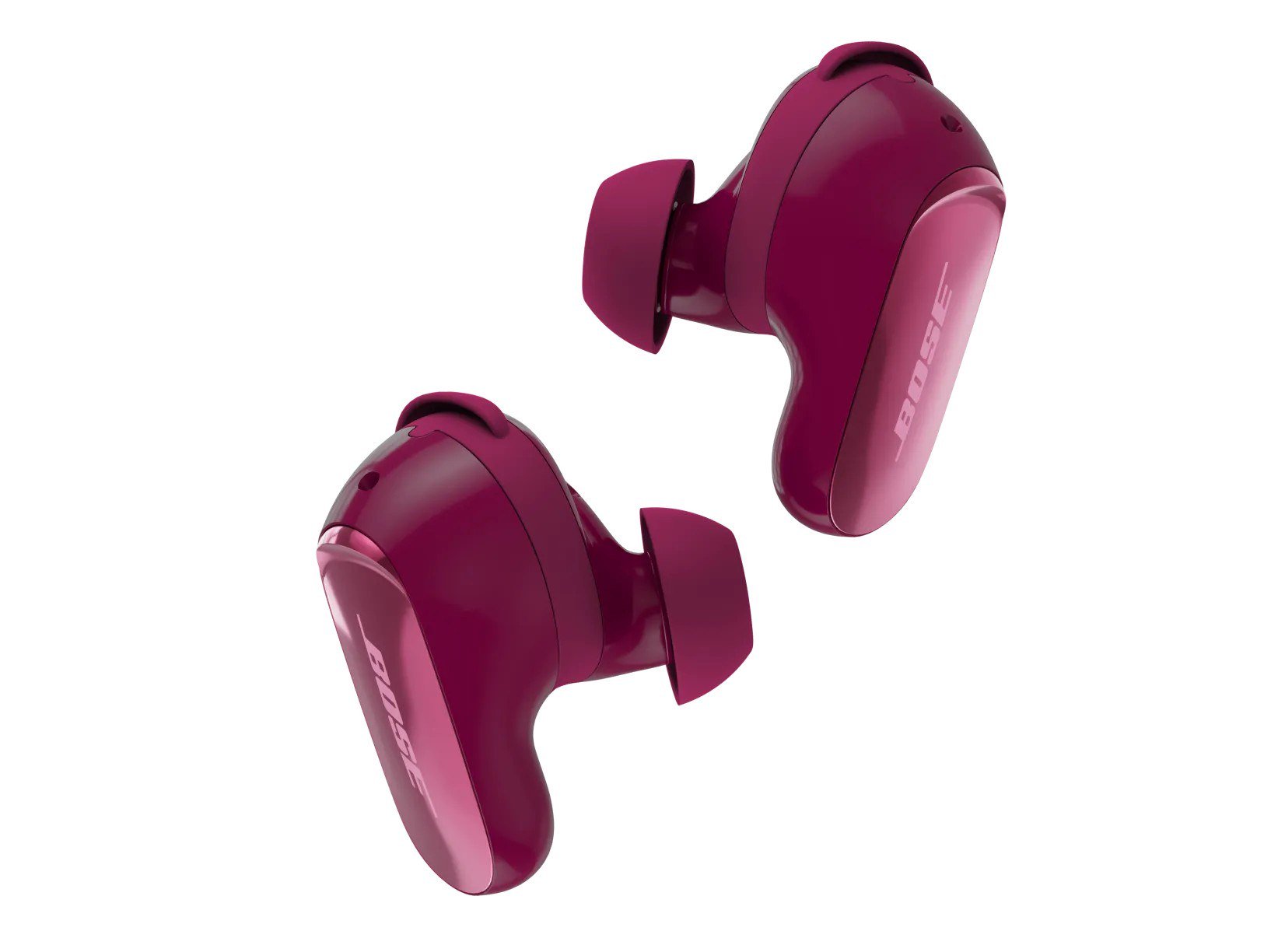 Best Bose Earbuds 2026: QuietComfort Ultra vs QuietComfort vs Ultra Open vs Sport Open vs Wired All five Bose earbuds compared on Bose's published specs and prices, from the $299 QuietComfort Ultra Earbuds (2nd Gen) and Ultra Open Earbuds (2nd Gen) to the $99 Noise Cancelling...
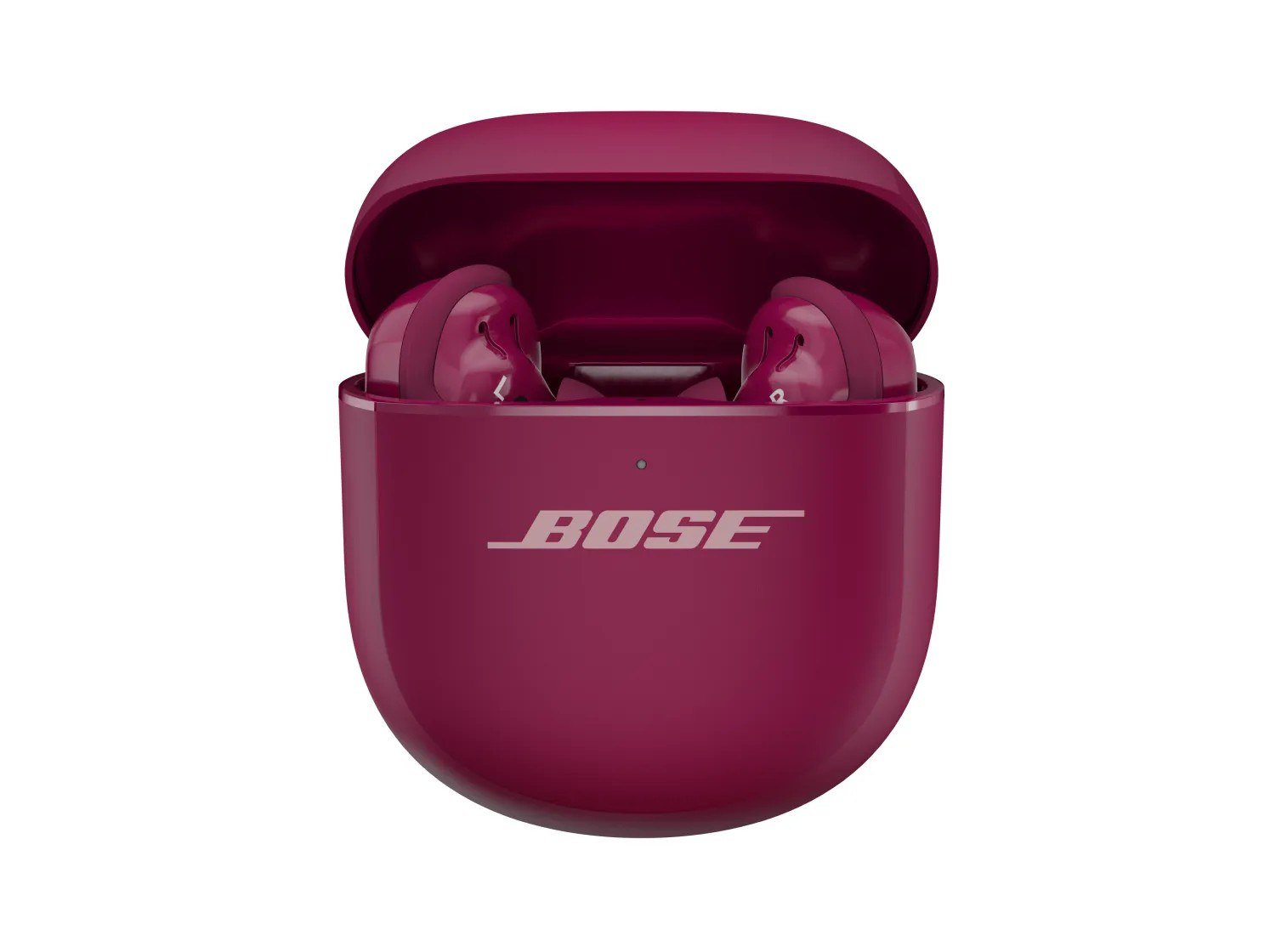 How to Set Up Bose QuietComfort Ultra Earbuds (2nd Gen): Pairing, Fit, Multipoint and Reset Step-by-step setup for Bose QuietComfort Ultra Earbuds (2nd Gen) from Bose's owner's guide: app and Bluetooth pairing, Fast Pair, eartip and band fit, touch controls, multipoint, c...
 Google Store Cuts Pixel 11 Pro to $799 and Pixel 11 to $699 Through November 8 The U.S. Google Store has the unlocked Pixel 11 Pro at $799 (was $1,099), the Pixel 11 at $699 (was $899) and $350 off the Pixel 11 Pro XL until November 8, 2026 at 11:59 PM PST, p...